

5 Things You Need to Know About Big Box Logistics in Q4 2025
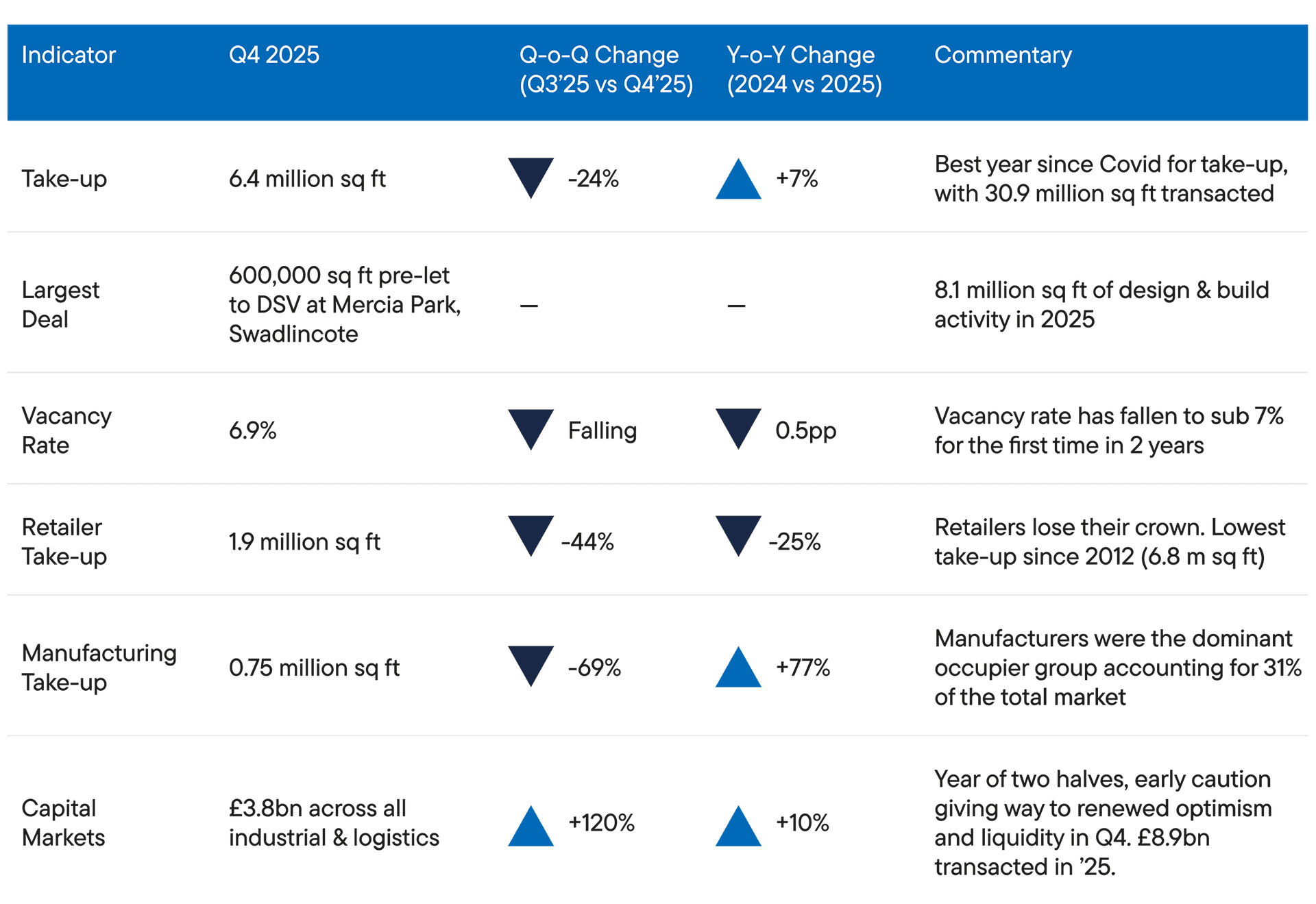
- Occupier take-up hit c.31m sq ft in 2025, the strongest post-Covid year to date.
- For the first time manufacturers were the dominant occupier, whilst grocers and major retailers continued to transact at scale but also push contracts down to 3PLs.
- The DTRE Big Box Vacancy rate has moved to 6.9%, the first time it’s been under 7% in just over two years.
- Capital markets volumes reached £8.9bn in 2025, with £3.8bn transacted in Q4 alone, led by a number of large portfolio deals.
- Limited new supply, easing debt costs and rising confidence point to a shift in ’26. But geopolitics remains a wildcard.
Key Market Indicators You Need To Know in Q4 2025
Occupational Market
The UK’s Big Box Logistics market demonstrated notable resilience throughout 2025 and despite a year dominated by geopolitical uncertainty, tariffs, persistent inflationary pressures and a delayed UK Budget, the sector delivered its best year of take-up since Covid ended, totaling just shy of 31 million sq ft. While volatility remained the prevailing backdrop, occupier demand strengthened as the year progressed, with c.15 million sq ft of deals in the second half of the year, the best H2 since 2022 and confirming the return of large-scale logistics leasing.
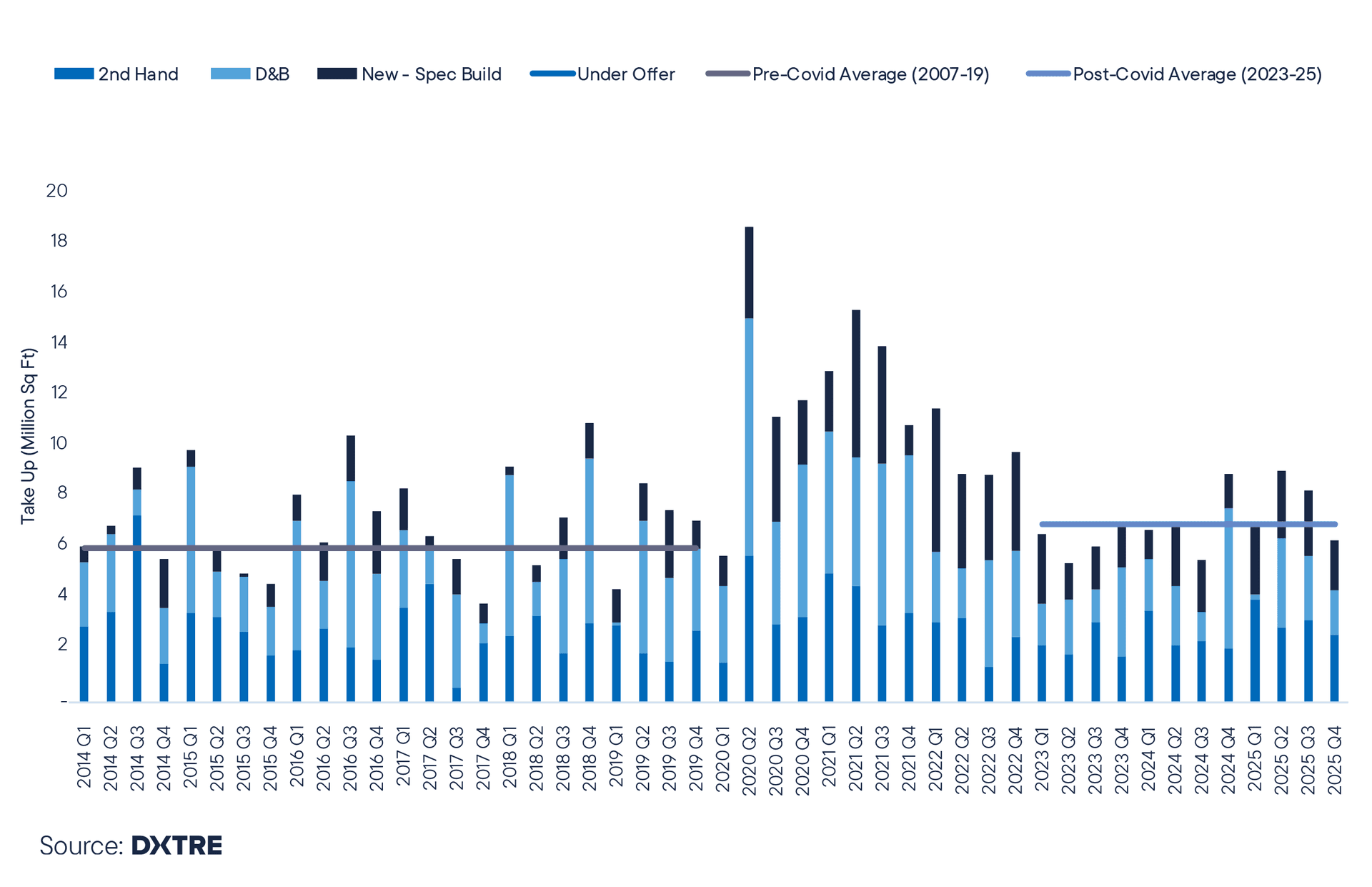
Take-up of units over 100,000 sq ft totalled 30.9 million sq ft in 2025, running 7% ahead of 2024 and 7% above the five-year pre-Covid average (2015–2019). This reflects the depth of structural demand from third-party logistics providers, retailers, particularly the grocers and a resurgent manufacturing sector. Momentum was sustained into Q4, with a further 8.5 million sq ft currently under offer, providing a strong pipeline of nearterm activity heading into 2026.
Fig 1. Take-up by Grade and by Quarter
For the first time ever in DTRE’s DXTRE database, manufacturers were the dominant occupier group, accounting for 40 separate transactions and 31% of the total market, the most transactions by manufacturers in a single year on record and 67% up on the average number of deals manufacturers typically account for in each year since 2007. The increased presence by the manufacturing sector reflects reshoring trends, supply-chain resilience initiatives and increased government spending, particularly in defence-related sectors. The standout transaction of the year saw Agratas acquire a site in Somerset to develop a 2.5 million sq ft gigafactory, representing one of the largest manufacturing commitments seen in the UK market of late.
Retailers remain active, particularly the grocers who continue to consolidate distribution networks, invest in automation and drive operational efficiencies. Retail-led demand was reinforced by Marks & Spencer’s 1.3 million sq ft pre-let at Prologis’ DIRFT, underlining the scale and long-term commitment from the major national retailers, with Tesco (London Gateway), Waitrose (Mountpark Bristol 360) and Iceland (Ergo Oldham 369) all active in 2025.
Importantly, confidence was not confined solely to design and build and pre-letting activity. Speculative space also saw improved leasing traction, with 9.9 million sq ft (43 deals) up 38% year-on-year. This demand for new, speculative built product was highlighted by Panattoni’s PP885 letting to GXO in Avonmouth, and despite the preference from occupiers for new/Grade A units, there remains a place for ‘second-hand’ assets, as demonstrated by the fact that there was c.13m sq ft of take-up of ‘second-hand’ units, 21% up on 2024’s total and the second-best year of take-up for ‘second-hand’ units since 2007 (exc Covid years 2020/21).
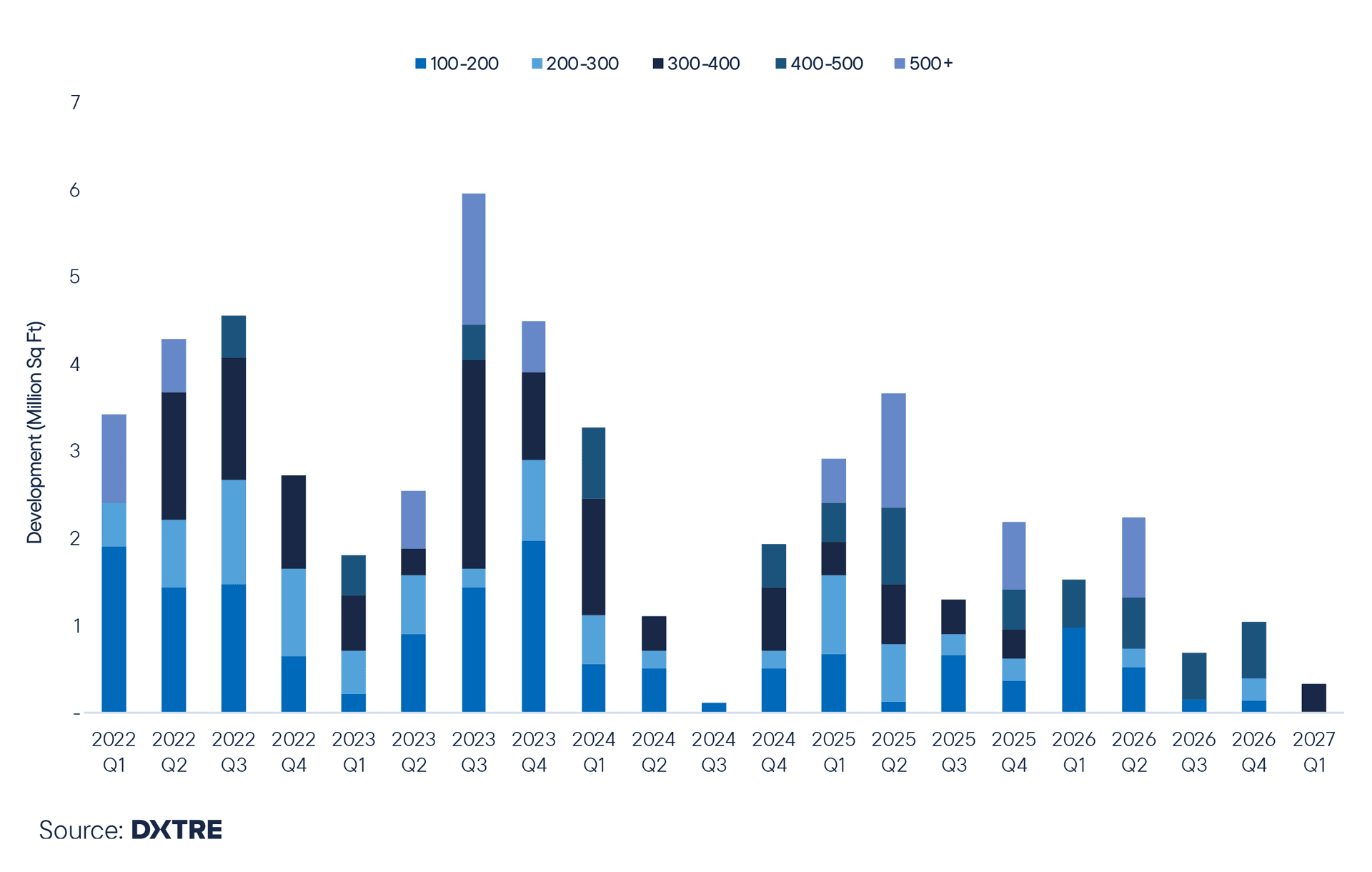
Fig 2. Speculative Development Outlook is Subdued
As a result of this improved leasing velocity, the DTRE Big Box Vacancy Rate edged down from 7.4% to 6.9% through the year, marking the first sustained decline in vacancy for over two years. This improvement has occurred despite there still being 58.9 million sq ft of vacant Big Box space currently available across the UK. Of all the available stock, approximately 63% is ‘second-hand’, but quality continues to drive decision-making, with occupiers increasingly focused on operational efficiency, energy performance and long-term sustainability credentials, hence why demand last year was focused on Grade A/New build/D&B (design and build) product which accounted for 58% of take-up.
Geographically, the Midlands continued to dominate activity (38% of take-up), reaffirming its status as the UK’s logistics heartland. However, there were early signs of improving momentum in both the South East and London towards the end of the year, with 4m sq ft of deals, the best return since 2022. While affordability constraints have weighed on London take-up over the past two years, easing rental pressures may begin to unlock pent-up demand in 2026, albeit on the other-hand business rates pressures could extent that standoff.
Supply-side discipline has been a defining feature of the market in 2025. Developers, constrained by historic land prices and flatlining rental growth and exit yields have largely stepped back from speculative development, and as a result, the speculative development pipeline remains subdued heading into 2026.
There is now just under 6 million sq ft of new speculative space due to practical completion over the next 12 months, well below the long-term rolling four-quarter average of approximately 10.9 million sq ft. This slowdown is enabling the market to absorb the post-pandemic wave of new supply and is expected to place downward pressure on vacancy through 2026, assuming occupier demand remains broadly in line with current expectations.
Moving through 2026, expect rental polarisation to become increasingly entrenched with newer EPC A / BREEAM ‘Excellent’ & ‘Outstanding’ buildings commanding rental premiums. The average achieved headline rents for Grade A grew 6.5% in 2025, reflecting strong occupier preference for modern, energy-efficient stock and incentives should start to tighten for this type of product as we move through the year.
In contrast, secondary assets, of which there are currently 178 units, totaling 37.2 m sq ft across the UK, are facing mounting competition, as well capex requirements and growing obsolescence risk. Despite strong leasing volumes for second-hand space, rents flatlined in 2024, with average headline growth of just 1.4% in 2025.
Capital Markets
Despite ongoing macroeconomic noise, the UK’s industrial and logistics capital markets gained momentum as 2025 progressed. The year proved to be one of two distinct halves, with early caution giving way to improving confidence later on. Q4 2025 alone saw £3.8 billion transacted, making it the strongest quarter since Q1 2022, when base rates were still at 0.5%. Over the entirety of 2025, £8.9bn was transacted across the entire industrial and logistics landscape. However, at just shy of £2.5bn transacted, it was the lowest volume of single-let (exc portfolios) deals done in over 10 years.
Activity was increasingly concentrated, with fewer deals but significantly larger ticket sizes. Seven transactions of approximately £200 million or more accounted for 82% of Q4 volumes, as portfolio and platform acquisitions dominated over single-asset transactions. This reflects both investor preference for scale and the limited availability of prime, institutionally acceptable stock at the prices both vendors and purchasers were willing to trade at.
Fig 3. Rolling 4 Quarter Investment Volumes
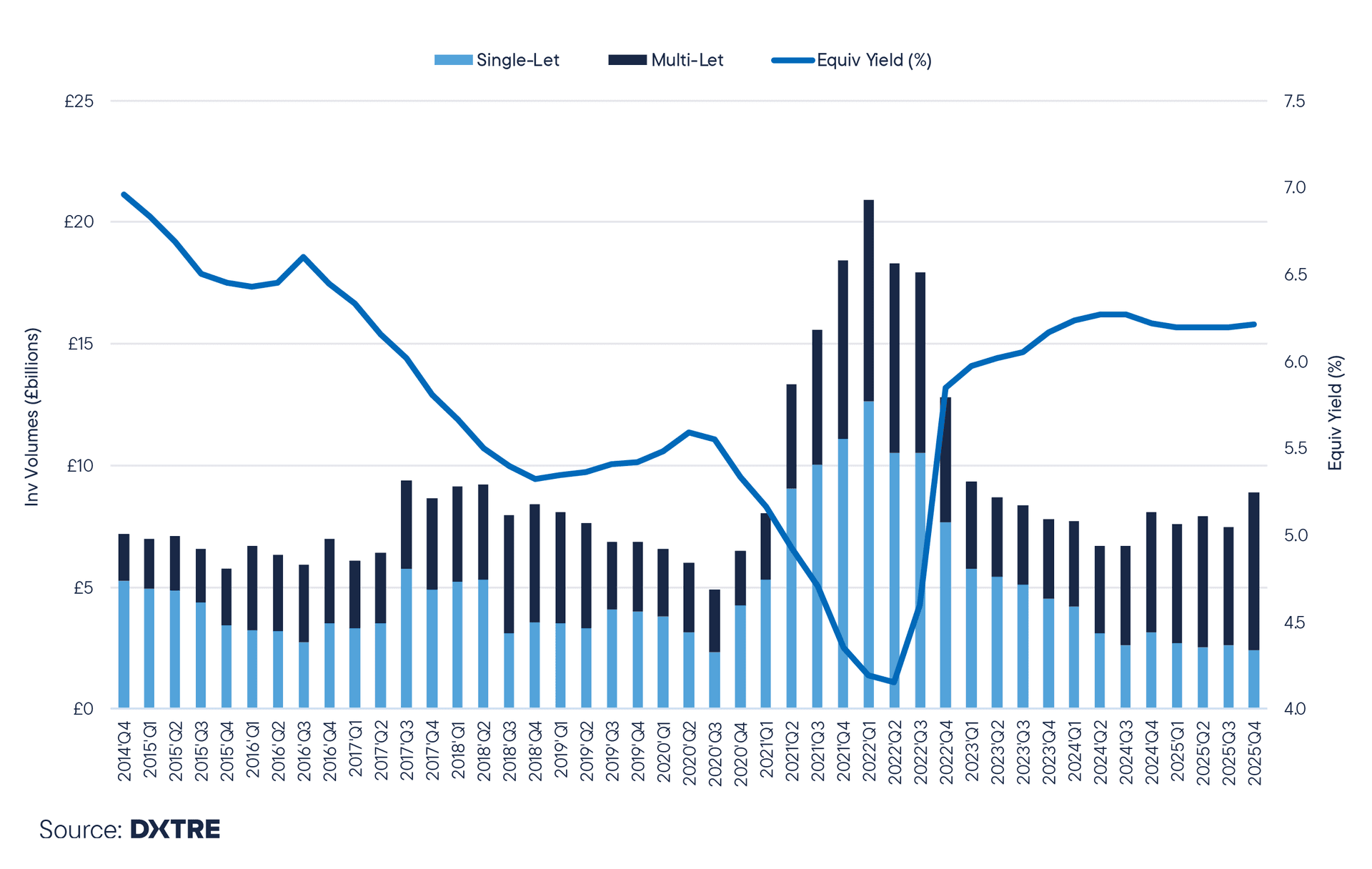
The biggest deal of the year occurred in Q4, when Tritax Big Box REIT acquired c.£1.04bn of assets from Blackstone, with Crosstree also acquiring 12 estates from BlackRock (BAPF) for c.£373m in the same month. These deals demonstrating the renewed momentum and liquidity in the capital markets towards the end of the year. The biggest single-let deal of Q4 saw Leftfield acquire Mountpark 360 in Bristol which was recently let to Waitrose, for £55.5m/5.53%, slightly ahead of quote.
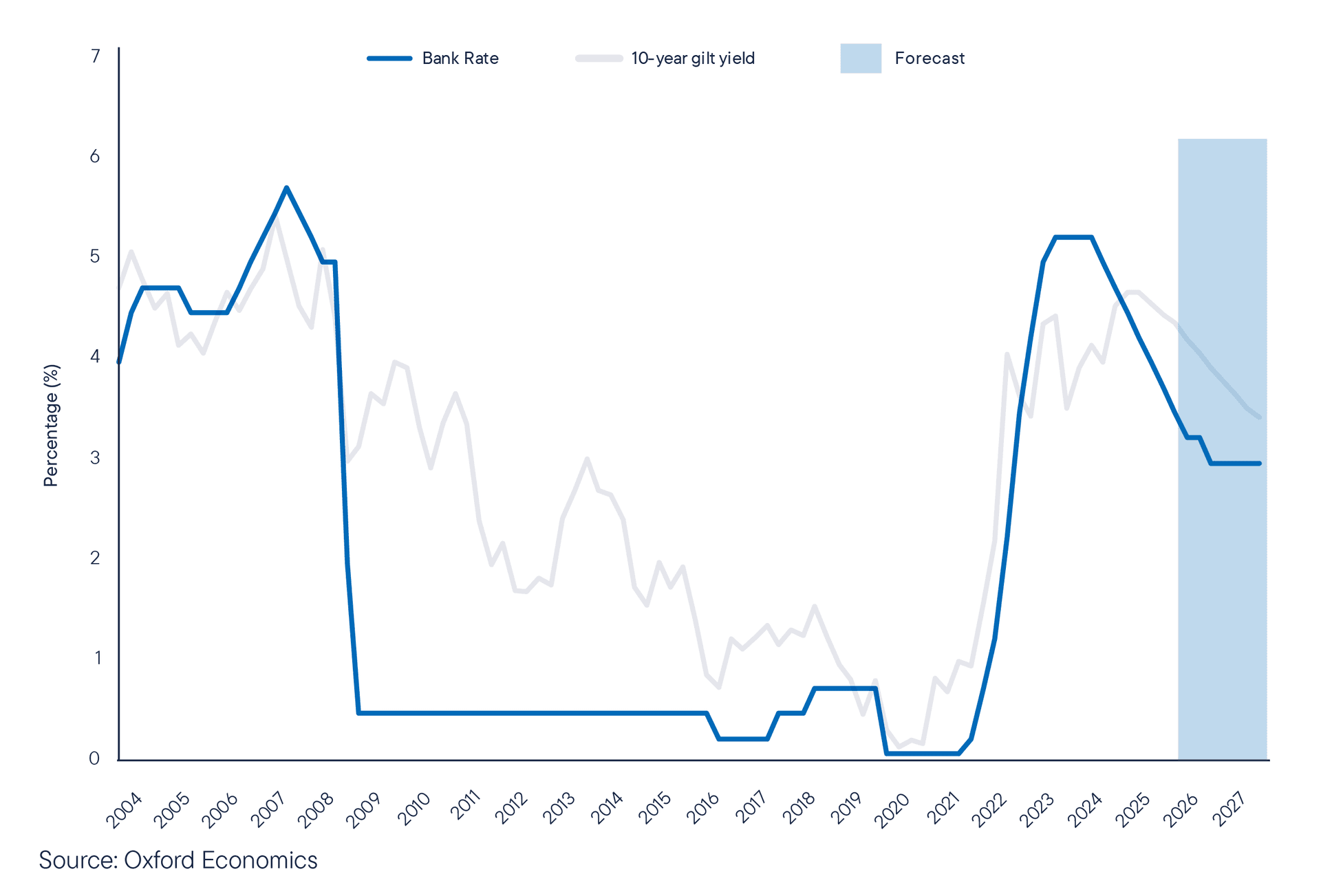
Moving through this year, whilst there’ll be no return to 2021-style pricing, alignment is already improving after nearly three years of stand-off. With debt markets showing increased liquidity for logistics assets and borrowing costs easing, with a further 50-75 bps of rate cuts expected this year, investor confidence has strengthened. In addition, the anticipated re-organisation of the Local Government Pension Schemes (LGPS) could facilitate increased allocations to logistics from core capital during 2026, which could push down on prime yields.
It would be remiss to not mention that there remain one or two potential speed bumps in the road. Firstly, “amend and extend” fatigue, which is becoming increasingly apparent across real estate, although it remains unclear whether this will translate into meaningful distress within logistics specifically, or remain contained in the other sectors. And secondly, geopolitics, which remains the principal wildcard.
However, if the prevailing mindset over recent years has been “survive ‘til ’25”, then 2026 increasingly looks like a year where the focus shifts toward deploying capital rather than simply preserving it.
Fig 4. Interest Rates Will Fall to 3.00% by End ’26